Former National Guard Drug Task Force Member Sentenced Over Machine Gun After Losing Second Amendment Challenge
Ruby Celly Uribe got two years and five months in prison after a judge rejected her claim that short-barreled rifles are protected by the Second Amendment.
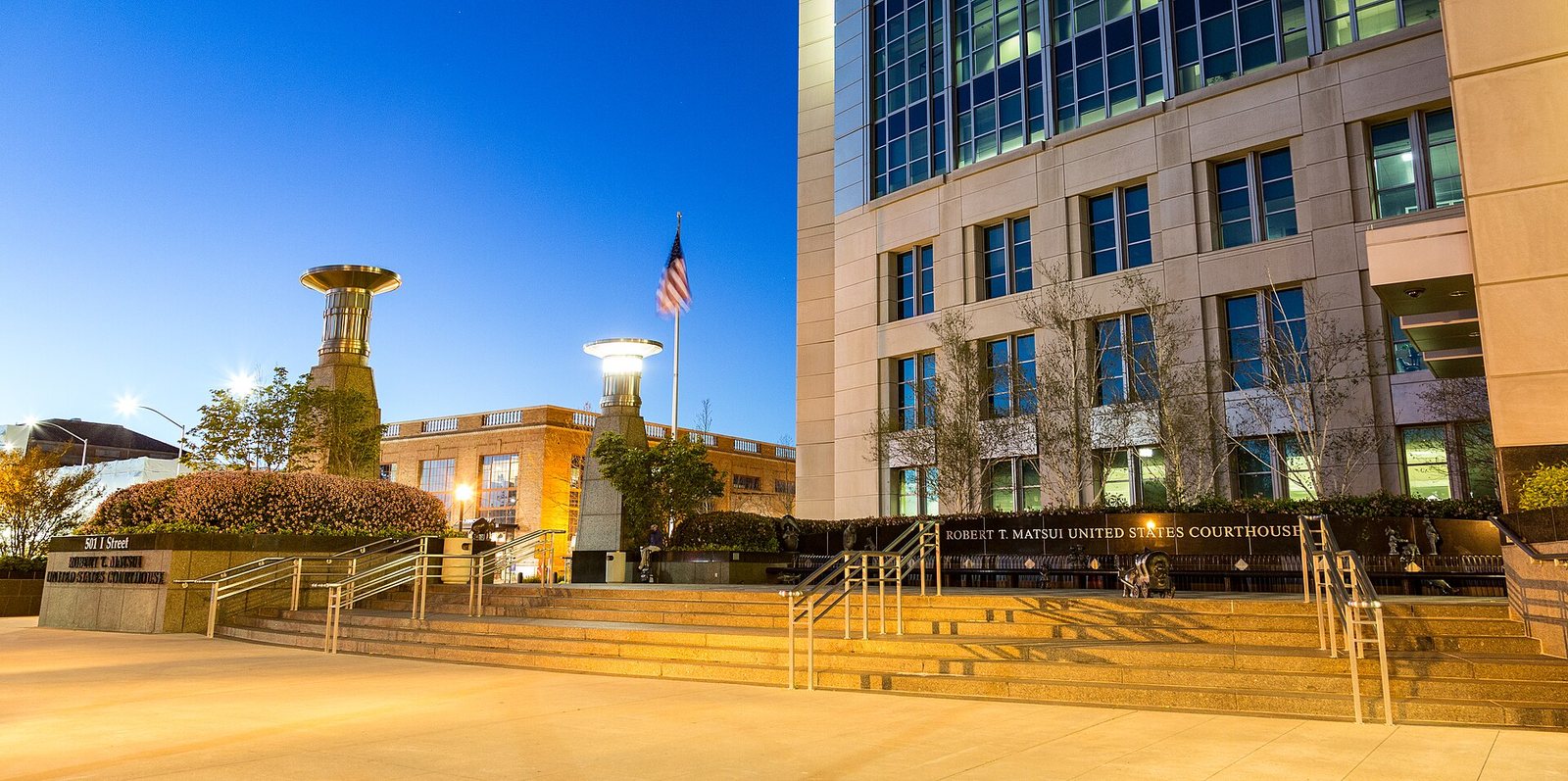
A former member of the California National Guard’s Counterdrug Task Force was sentenced on Friday, Oct. 9, 2026, to two years and five months in federal prison for possessing a machine gun and an unregistered short-barreled rifle, the U.S. Attorney’s Office for the Eastern District of California said.
U.S. District Judge Dena Coggins sentenced Ruby Celly Uribe, 37, of Sacramento. A jury found her guilty on May 26, 2026. Her sentencing had been set for Sept. 11, 2026, and was moved to Oct. 9, 2026, at her request, the court docket shows.
How the guns came to light
According to court documents and trial evidence described by prosecutors, Uribe worked in the logistics shop at California National Guard headquarters in Mather and was a member of the Counterdrug Task Force, which supports local, tribal and federal agencies against drug trafficking organizations.
Prosecutors say she leaked information about upcoming drug raids, including dates, locations and the number of military vehicles and aircraft involved, to a person she knew was involved in drug dealing. Text messages on her phone and the dealer’s phone showed the leaks, according to the office. She was not charged with leaking the information.
A federal search of her home turned up a short-barreled rifle with no serial number, a so-called ghost gun, that had been modified to fire fully automatically, prosecutors said. A search of her phone showed she was also trafficking other unserialized, short-barreled machine guns, including to a co-worker on July 20, 2022, according to the office. While preparing for trial, the FBI learned of and recovered another machine gun she had sold in August 2022.
The Second Amendment challenge
Before trial, Uribe asked the court to throw out both counts, arguing that the laws violated the Second Amendment as applied to her under the Supreme Court’s 2022 decision in New York State Rifle & Pistol Association v. Bruen. Judge Coggins rejected the machine gun challenge from the bench at a March 13, 2026, hearing and the short-barreled rifle challenge in a seven-page written order on April 6, 2026.
In that order, the judge agreed that Uribe, who had no criminal history, was among “the people” the Second Amendment protects. But she found Uribe had not shown that short-barreled rifles are “in common use” for self-defense.
Uribe’s lawyer pointed to a federal count of 532,725 registered short-barreled rifles in the United States in 2021. The government answered that there were an estimated 393 million civilian-held firearms in the country as of 2018, so registered short-barreled rifles were likely less than 1% of all firearms. The judge sided with the government and with what she called “the overwhelming weight of judicial authority” holding that such weapons are not protected.
The charges
The indictment, returned on Feb. 1, 2024, charged one count of unlawful possession of a machine gun and one count of possessing a short-barreled rifle not registered to her in the National Firearms Registration and Transfer Record, on or about Dec. 13, 2022. Federal law generally bans possession of machine guns and of unregistered rifles with barrels shorter than 16 inches.
The FBI and the Bureau of Alcohol, Tobacco, Firearms and Explosives investigated, with help from the California Military Department. Assistant U.S. Attorneys Adrian T. Kinsella and Nicole M. Vanek prosecuted the case.