Austin: Yogurt Shop Victim’s Family Still Asks Whether the Killer Had Help
Nearly 35 years after four girls were killed in an Austin yogurt shop, Amy Ayers’ brother and his wife question whether Robert Brashers acted alone.
Nearly 35 years after four girls were killed inside an Austin yogurt shop, relatives of the youngest victim are still asking whether the man authorities identified as the killer acted alone.
Shawn Ayers, whose 13-year-old sister, Amy, was among the victims, and his wife, Angie, talked about their doubts in a Fox News Digital report published October 24, 2026. They have also helped start a nonprofit meant to support police and families in other unsolved cases.
Two guns, one suspect
For Angie Ayers, the doubt comes down to the weapons. Two guns were used in the killings, a .22-caliber gun and a .380-caliber pistol, according to the report. She said Robert Eugene Brashers had never used both in any of his other known cases, though she added that she could be wrong.
At a September 29, 2025, news conference, investigators said they had no evidence that Brashers had an accomplice. Lead detective Dan Jackson noted that Brashers had been alone in all of his known crimes. “We have no evidence at this point that he had somebody with him,” Jackson told CBS Austin at the time.
Two guns do not, on their own, show that a second person was there, and Brashers cannot be asked. The question goes back to a December night in 1991.
A fire just before midnight
Shortly before midnight on December 6, 1991, a fire was reported at the I Can’t Believe It’s Yogurt! shop at 2949 West Anderson Lane. When firefighters put it out, they found the bodies of four girls, according to the Austin Police Department.
The victims were Jennifer Harbison, 17; her sister, Sarah Harbison, 15; Eliza Thomas, 17; and Amy Ayers, 13. Jennifer and Eliza worked at the shop, and Sarah and Amy were with them while they closed for the night. The fire and water from the shop’s sprinklers made evidence difficult to collect, police said.
It would take until September 2025 for that evidence to point to Brashers.
How the DNA led to Brashers
That month, Austin police announced a match from a South Carolina lab. The unknown male DNA profile from the yogurt shop matched Brashers’ known profile from a 1990 sexual assault and murder in Greenville, South Carolina. It was a complete 27-allele Y-STR match, a type of test that looks at DNA passed down the male line.
Austin police also described an encounter from two days after the killings. On December 8, 1991, Brashers was stopped at a westbound Border Patrol checkpoint between El Paso, Texas, and Las Cruces, New Mexico, driving a stolen car and carrying a .380 pistol, according to Austin police.
Police said the serial numbers show it was the same gun he used to kill himself during a police standoff in Missouri in 1999. Because he was dead, Brashers was never tried for the yogurt shop killings.
On February 19, 2026, Travis County District Attorney José Garza said in remarks that the evidence was clear and that Brashers committed the murders.
The four men who were wrongly accused
Garza spoke on the same day a judge cleared four men who had been accused years earlier: Robert Springsteen, Michael Scott, Maurice Pierce and Forrest Welborn. All four were arrested in 1999, but their cases ended differently.
Springsteen and Scott were convicted of capital murder, and both convictions were later reversed. The charges against Pierce and Welborn were dropped. DNA testing excluded all four as sources of the unknown male profile, police said.
Judge Dayna Blazey declared all four innocent, Texas Public Radio reported, and Garza apologized to them. Pierce was cleared after his death; he was killed in a 2010 incident involving an Austin police officer.
Three months later, on May 28, 2026, the Austin City Council approved a settlement of up to $35 million with Scott, Springsteen, Welborn and Pierce’s estate and family.
City documents say the men brought federal civil rights and other claims over their wrongful arrests and convictions. The documents say the agreement resolves all of those claims. The money is not for the families of the girls who were killed.
From one family’s search to other families’ cases
The idea for a nonprofit grew out of the Ayers family’s own search for answers and their talks with other families, Angie Ayers told Fox News Digital.
That idea became the National Cold Case Center. The couple co-founded it with two former prosecutors: Mindy Montford, who worked as a Travis County prosecutor, and Anne Marie Schubert, a former Sacramento County district attorney. KXAN reported the launch on October 1, 2026.
The group says it wants to pay for forensic testing and investigations, train investigators and offer round-the-clock support to victims’ families. It also hopes to build a national database that would use AI-powered pattern detection to link cases across state lines, KXAN reported. For now, that database is a goal, not a working system.
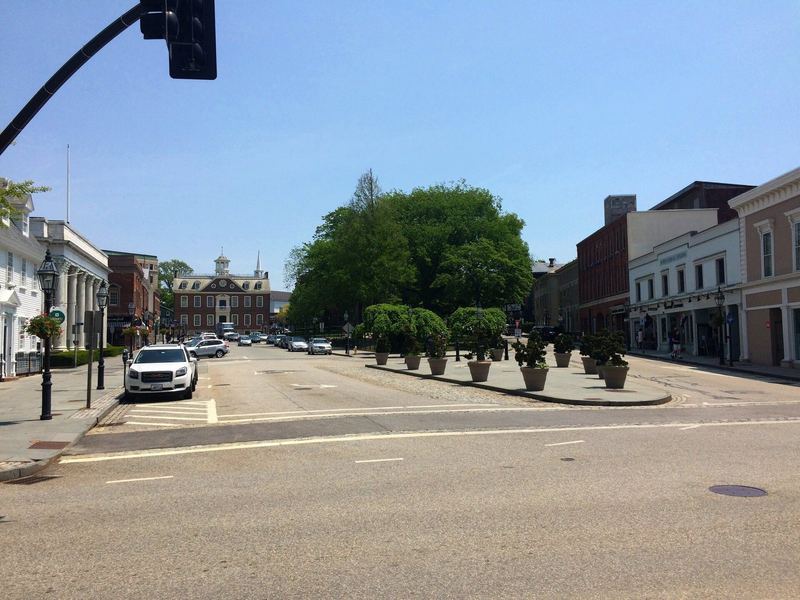
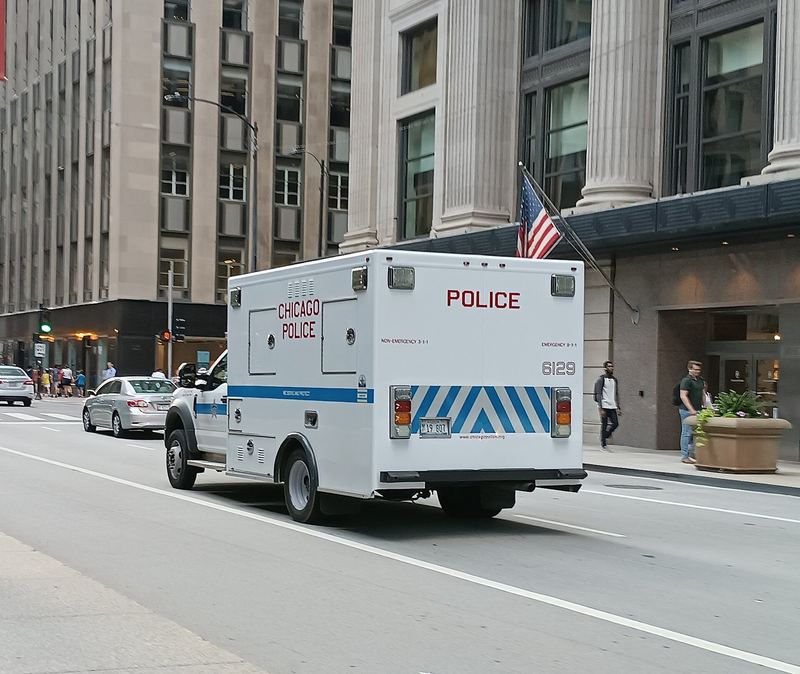
Forensic testing has moved other decades-old cases, too. On October 12, 2026, Chicago police said a former officer who died in 2006 killed 8-year-old Gloria Kowalewicz in 1960. In Rhode Island, DNA from a discarded water bottle led to a murder charge in a 1985 Newport killing, prosecutors say.
For the Ayers couple’s center, the most pressing need is money so it can take on its first cases, Angie Ayers said.
As Shawn Ayers told Fox News Digital, a killer could be “right next to somebody,” and people could walk past without ever knowing.